Commercial cleaning and food safety professionals in Brampton assist food establishments, food centers, bakeries, warehouses, and food service operations maintaining standards. They sanitize high-contact points, food preparation surfaces, equipment, floors, drains, restrooms, and prep zones using certified products, at correct dilution, and documenting contact times. You require regular sanitation determined by hazard complete info level, volume, allergens, and regulatory assessments, plus verification records that support Hazard Analysis Critical Control Points, audits, and public health compliance. The sections below explains how effective cleaning systems must contain.
Essential Summary
- Brampton's sanitation experts support restaurants, grocery departments, commissaries, warehouses, bakeries, schools, mobile vendors, and allergen-sensitive operations.
- Cross-contamination elimination is accomplished by disinfecting high-touch surfaces, food-contact equipment, kitchens, floors, drains, restrooms, and storage areas with sectional methods.
- Checking of proper chemical concentration, suitability, and contact time is completed by trained contractors, with finalization filed using samples, assessments, and action records.
- Sanitation timelines ought to comply with danger, production rate, changeovers, releases, and requirements, with regular, periodic, and cyclical tasks distributed by area.
- Suppliers must demonstrate hazard analysis knowledge, public-health knowledge, WHMIS education, coverage, credentials, color-coded instruments, and assessment-ready hygiene files.
Which Brampton Venues Need Food Safety Cleaning?
Brampton facilities that handle, store, prepare, package, or serve food require food safety cleaning. Implement it if your operation is regulated by health department oversight, food standards, or HACCP systems. The obligation covers restaurants, cafeterias, commissaries, grocery food departments, butcher shops, seafood counters, convenience stores, and institutional kitchens.
You'll furthermore need adherent sanitation standards in distribution warehouses, production plants, frozen storage areas, commercial bakeries, educational meal programs, banquet venues, and food delivery services. Mobile and temporary businesses are included, like catering trucks, festival vendors, and pop-up food booths. Should your staff prepare supplies, portion finished foods, reheat items, or manage allergen inventory, your establishment requires recorded sanitation procedures. In Brampton, sanitation continues to be necessary; it represents lawful, operational, and customer protection standards.
What Services Do Brampton Cleaning Experts Provide?
You require experienced cleaning professionals who sanitize frequently touched areas, cooking areas, floor areas, and restroom facilities to ensure compliance with food safety and health standards. These areas are targeted due to their high cross-contamination potential, slip and fall dangers, and regulatory breaches.
By understanding their service scope, you can make sure your facility's cleaning procedures meet compliance standards.
Disinfecting High-Touch Areas
create a cleaning protocol
You should confirm cleaning product specifications, mixing ratios, and required exposure periods according to company specifications and health codes. to ensure effectiveness. Specialists might utilize surface swabbing to check cleaning effectiveness
Kitchen Areas, Floor Surfaces, and Bathroom Spaces
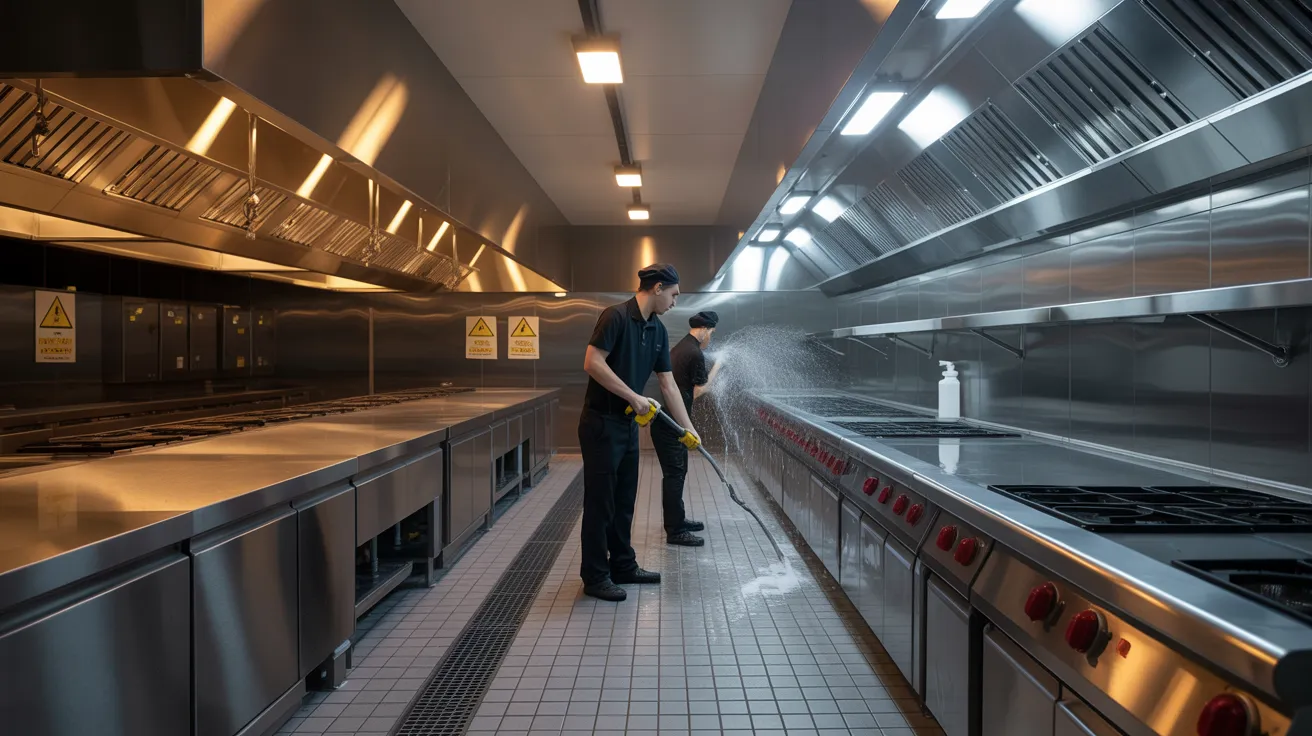
Brampton cleaning services zero in on kitchens, floors, and restrooms as each zone involves distinct sanitation, slip-and-fall, and public health concerns. In industrial kitchens, you need grease removal from cooking stations, appliance surfaces, drain systems, preparation areas, and backsplashes to reduce contamination and pest pressure.
Documented floor maintenance is likewise provided as part of the service.
For restroom sanitation, cleaners sanitize touchpoints, fixtures, partitions, dispensers, and waste containers, then replenish amenities and manage odor. They also service restaurant moprooms, where chemical storage, sink hygiene, and drainage conditions can affect sanitation compliance and staff safety daily.
Food Safety Cleaning Significance for Brampton Businesses
To comply with regulatory mandates and pass inspections, Brampton facilities must follow appropriate cleaning protocols. You also reduce cross-contamination by cleaning and sanitizing food-contact surfaces, equipment, and high-touch areas correctly. Most importantly, you safeguard public health by lowering the risk of foodborne illness in your facility.
Sanitary Standards Adherence
Because Brampton food companies operate under strict public health standards, food safety cleaning directly affects your capacity to satisfy health code requirements, safeguard customers, and sidestep enforcement action. You must maintain hygienic food handling zones, documented cleaning schedules, safe chemical management, and verifiable staff procedures that align with municipal and provincial inspection expectations.
Thorough sanitation measures supports allergen management by decreasing buildup on common tools plus commonly contacted zones. If your cleaning standards slip, you expose yourself to violations, compliance orders, public perception damage, and potential service suspension during follow-up inspections or enforcement actions.
Contamination Management
Maintaining regulatory compliance copyrights on your power to stop cross-contamination during everyday food preparation and sanitation. You must separate raw ingredients from ready-to-eat foods, sterilize work zones between assignments, and store chemicals away from food-contact items. Explicit protocols lower contamination threats and support consistent compliance during inspections.
Implementing allergen segregation helps ensure major allergens don't touch shared surfaces, containers, or equipment. Utilize separate boards, color-labeled items, and clear tool marking so workers don't combine products while preparing or distributing. Enforce hand hygiene following fresh proteins, aquatic items, egg products, or allergen materials. Replace wiping cloths regularly, and validate disinfectant levels using test strips. When you train staff to follow these controls per shift, you establish a more hygienic, safer workplace that meets Brampton's food safety expectations regularly.
Community Health Safety
When food safety cleaning deteriorate, you don't only risk a failed inspection—you expand the chance of foodborne illness affecting customers, staff, and the larger Brampton community. You also undermine your responsibility in protecting public health, especially in busy food facilities where pathogens travel quickly through surfaces, equipment, and touchpoints.
You need cleaning protocols that remove soils, disinfect properly, and confirm effectiveness. That means following exposure periods, using approved disinfectants, recording cleaning times, and training staff to meet regulatory standards. These controls support pathogen reduction by lowering microbial loads before they contaminate surfaces or food. In Brampton, rigorous cleaning protects vulnerable populations, limits outbreak potential, and helps you demonstrate proper care. When you clean to standard, you don't just meet regulations—you actively reduce risk and promote secure food handling citywide.
How Does Cleaning Support Food Safety Compliance?
Prioritizing strict sanitation practices solidifies food safety compliance by reducing contamination risks, preventing pathogen multiplication, and positioning your facility in accordance with sanitation requirements under HACCP-based programs and public health regulations. You validate that food-contact surfaces are visibly clean and microbiologically controlled, enabling documented preventive controls and inspection readiness.
Rigorous cleaning standards also enhance allergen mitigation by extracting residues that can lead to undeclared allergen exposure.
What's the Right Time to Plan Commercial Cleaning?
Cleaning schedules perform optimally when you create them according to risk, production volume, and regulatory requirements rather than relying on a fixed calendar alone.
You should also arrange periodic tasks independently
Selecting the Right Brampton Cleaning Experts: Key Considerations
Start by screening providers against food sanitation standards, not cost only. You should verify that each company understands CFIA, public health, and HACCP compliance standards relevant to your facility. Ask for insurance documentation, WHMIS compliance, documented staff training, and supervision practices. Review whether technicians understand contamination prevention, chemical handling, and traceable sanitation records.
Additionally, you need to evaluate service dependability and responsibility. Obtain references from Brampton food operations, then review response times, corrective-action procedures, and communication practices. Verify the company conducts supplier reviews and can deliver compliance-ready records when inspectors or external parties need proof. Verify equipment upkeep, color-coded equipment are applied correctly, and site-specific hazards are identified. A capable service protects compliance, product quality, and your brand reputation.
Which components are part of a hygiene cleaning program?
Document a plan that defines every sanitation task, standard, and responsibility before production begins. You should record cleaning frequencies, approved chemicals, dilution rates, contact times, tools, and verification methods for each zone, surface, and piece of equipment. Remember to add pre-operational inspections, corrective actions, and employee training requirements.
Your plan should also tackle cross-contamination controls, waste handling, pest-prevention measures, and documented schedules for restrooms, drains, floors, and food-contact areas. Specify how you'll separate raw and ready-to-eat processes, facilitate ingredient tracking, and maintain accurate allergen labeling through validated cleaning between product changes. You should establish accountability, document signed records, and assess results against regulatory standards, HACCP controls, and customer requirements. When gaps appear, update procedures immediately and instruct staff.
Commonly Asked Questions
Will cleaning services manage nighttime hours at Brampton facilities?
If you operate controlled facilities, you'll also need documentation that enable audits and maintain compliance.
Will Brampton cleaning experts respond to hazardous incidents?
Yes, you can expect Brampton sanitation professionals who offer hazard containment solutions. They manage hazardous materials, evaluate dangers, isolate affected areas, and begin swift cleanup to reduce exposure and prevent business interruption. You should verify arrival timeframes, training certifications, PPE protocols, and waste management. If your facility must comply with industry standards, choose a provider that records events, maintains regulatory procedures, and supports audit readiness.
Can plant-based disinfectants be applied securely on food-handling equipment?
Yes, natural disinfectants can be appropriate for surfaces contacting food if you opt for solutions certified for food use and complying with regulations. You should validate exposure duration, dilution rates, and rinse procedures before implementation. Many plant based formulas reduce toxic chemical contact, but you should gather evidence of effectiveness against target microorganisms. To ensure residue-free conditions, you must adhere to precise manufacturer instructions and ensure the disinfecting agent meets relevant food safety standards.
Will maintenance plans respond to seasonal shifts?
Certainly, sanitation programs accommodate seasonal production changes well. Adjust intervals, labor allocation, chemicals, and confirmation procedures to fit with seasonal workflows while upholding regulatory adherence. Reduce equipment downtime by timing sanitization during production shifts, high demand periods, and usage cycles. Also revise SSOPs, employee training, and environmental testing to reflect seasonal hazards, emerging allergens, or elevated soil levels. Scheduled reviews preserve the plan functional.
Are professional cleaning companies offering staff training on sanitation best practices?
Yes, commercial cleaners often train your staff on hygiene standards. You get employee instruction on correct chemical application, exposure periods, cross-contamination prevention, machine breakdown, and documentation. They generally follow training with HACCP, GMP, and CFIA or local public health requirements. Many perform sanitation audits to confirm adherence, spot deficiencies, and reinforce corrective actions. This allows you to sustain uniform processes, succeed in audits, and reduce food safety risks daily.
Summary
By collaborating with Brampton commercial cleaning and food safety experts, you aren't just organizing—you maintain your facility compliance-focused and your standards up to code. From production areas to kitchen zones, every clean surface and organized space decreases contamination and avoids expensive losses. By arranging service at appropriate intervals and adhering to a systematic cleaning protocol, you protect your team, customers, and your credibility. In a heavily controlled environment, clean spaces must be prioritized—they're key to business compliance.